Why You May Need to Transfer Shares Between Demat Accounts
Managing your investments efficiently often involves switching brokers or consolidating multiple demat accounts. Instead of selling your shares and buying them again, you can simply transfer shares from one demat account to another. This allows you to retain ownership of your investments while enjoying the benefits of a new brokerage platform.
Whether you're changing brokers for lower brokerage charges, better trading tools, or improved customer support, understanding the share transfer process is essential. Fortunately, transferring shares between demat accounts is a straightforward process when you follow the correct procedure.
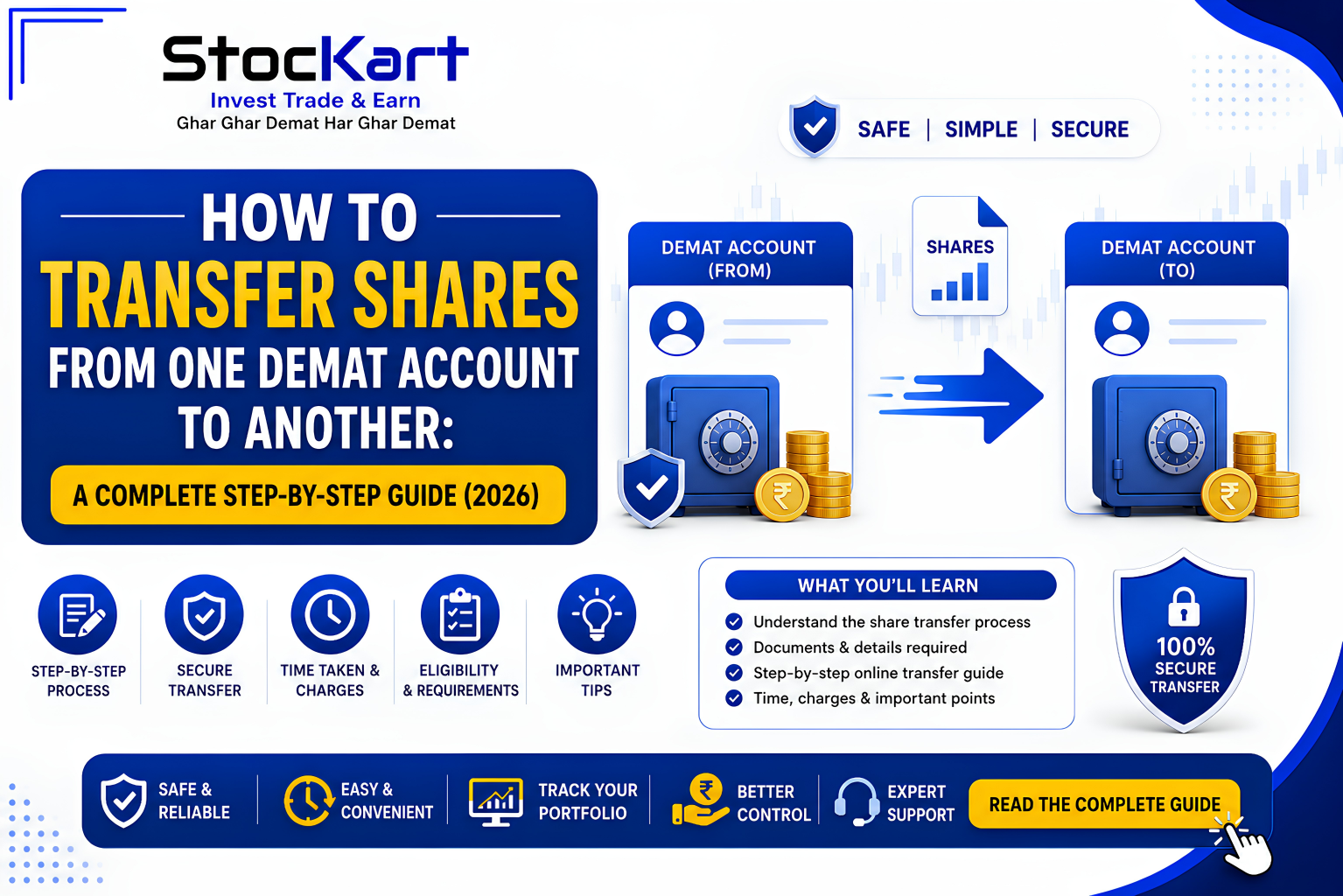
In this comprehensive guide, you'll learn how to transfer shares from one demat account to another, the different transfer methods, required documents, applicable charges, timelines, and best practices to ensure a smooth transfer.
What is a Demat Share Transfer?
A demat share transfer is the process of moving securities such as equity shares, ETFs, bonds, sovereign gold bonds, REITs, and InvITs from one demat account to another without selling them in the stock market.
Unlike selling your investments and buying them again, transferring shares keeps your ownership intact. This is particularly useful when you're switching brokers or consolidating your investment portfolio under one demat account.
Why Do Investors Transfer Shares?
Investors transfer shares for several reasons, including:
- Switching to a stockbroker with better services
- Lower brokerage and transaction charges
- Access to advanced trading platforms and research tools
- Consolidating multiple demat accounts
- Better customer support
- Gifting shares to family members
- Estate planning or inheritance
- Closing an old demat account
- Managing investments more efficiently
Choosing the right broker can improve your overall investing experience without requiring you to sell your existing investments.
Types of Share Transfers
There are two primary types of share transfers in India.
Off-Market Transfer
An off-market transfer takes place directly between two demat accounts without routing the transaction through the stock exchange.
Common Uses of Off-Market Transfers
Off-market transfers are generally used for:
- Transferring shares between your own demat accounts
- Gifting shares to family members or relatives
- Portfolio consolidation
- Account closure
- Succession or inheritance transfers
Since there is no market transaction involved, ownership changes without executing a buy or sell order on the exchange.
On-Market Transfer
An on-market transfer occurs during the settlement of shares bought or sold on a recognised stock exchange.
These transfers happen automatically through the exchange settlement process and generally do not require manual action from investors.
Methods to Transfer Shares from One Demat Account to Another
Depending on your depository and broker, you can transfer shares either online or offline.
Method 1: Online Share Transfer Using CDSL Easiest
If your demat account is registered with CDSL, you can transfer shares online through the CDSL Easiest facility.
Step 1: Register for CDSL Easiest
Visit the CDSL Easiest portal and complete the registration process using your demat account details.
Step 2: Verify Your Demat Account
Authenticate your account as instructed during the registration process.
Step 3: Add the Beneficiary Account
Add the destination demat account as a trusted beneficiary before initiating the transfer.
Step 4: Select the Securities
Choose the shares or securities you wish to transfer.
Step 5: Enter the Quantity
Specify the exact number of shares you want to transfer.
Step 6: Verify the Details
Review the beneficiary details, DP ID, Client ID, ISIN, and quantity carefully before submission.
Step 7: Submit the Request
Submit your transfer request. Once approved and verified, the shares are electronically transferred to the destination demat account.
Method 2: Offline Share Transfer Using a Delivery Instruction Slip (DIS)
If online transfer is unavailable, you can transfer shares using a Delivery Instruction Slip (DIS).
Steps to Transfer Shares Using a DIS Slip
- Obtain the DIS booklet from your broker or Depository Participant (DP).
- Fill in the destination DP ID and Client ID.
- Mention the ISIN of each security.
- Enter the quantity of shares.
- Select the transfer type.
- Sign the form exactly as per your registered signature.
- Submit the completed DIS to your broker before the cut-off time.
After verification, the broker processes your transfer request.
Documents and Information Required for Share Transfer
Before initiating the transfer, keep the following information ready:
- Source Demat Account Number
- Destination Demat Account Number
- DP ID
- Client ID
- ISIN of each security
- Number of shares
- Depository (CDSL or NSDL)
- Signed DIS slip (for offline transfers)
Providing accurate information helps prevent delays or rejection of your transfer request.
Can You Transfer Shares Between Different Brokers?
Yes. Investors can transfer shares from one broker to another without selling their holdings.
Broker-to-Broker Share Transfer
You can transfer shares in the following scenarios:
- CDSL to CDSL
- NSDL to NSDL
- CDSL to NSDL
- NSDL to CDSL
- One stockbroker to another stockbroker
Ensure that both demat accounts are active and KYC-compliant before initiating the transfer.
Charges for Transferring Shares
Share transfer charges vary from broker to broker.
Common Charges You May Pay
Some of the common charges include:
- Off-market transfer charges
- DP transaction charges
- DIS processing charges
- Account closure charges (if applicable)
- Applicable taxes
Many brokers waive transfer charges when investors close their existing demat account and shift their holdings to another broker.
Always verify the latest tariff before submitting your request.
How Long Does It Take to Transfer Shares?
The processing time depends on the transfer method.
| Transfer Method | Estimated Processing Time |
|---|---|
| Online via CDSL Easiest | 1–2 Working Days |
| Offline via DIS Slip | 2–5 Working Days |
The actual timeline may vary depending on verification, holidays, and your broker's internal processes.
Common Reasons Why Share Transfers Fail
Share transfers may fail because of:
- Incorrect DP ID
- Wrong Client ID
- Invalid ISIN
- Signature mismatch
- Frozen demat account
- Insufficient free share balance
- Incorrect transfer type
- Incomplete documentation
Double-check all details before submitting your transfer request.
Benefits of Transferring Shares Instead of Selling Them
Transferring shares directly offers several advantages.
- No need to sell your investments
- Avoid unnecessary brokerage charges
- Continue holding your long-term investments
- Simplify portfolio management
- Easily switch to a better broker
- Consolidate multiple demat accounts
- Save time and effort
For long-term investors, transferring shares is often a more practical option than liquidating and repurchasing investments.
Tips for a Smooth Share Transfer Process
Follow these best practices for a hassle-free experience.
- Verify all beneficiary details carefully.
- Check your broker's transfer charges.
- Ensure both demat accounts are active.
- Transfer only free (unpledged) securities.
- Keep the acknowledgment receipt safely.
- Monitor the transfer status until completion.
- Contact your broker immediately if any issue arises.
Why Choose StocKart?
If you're planning to switch brokers, choosing the right investment platform is just as important as transferring your shares.
StocKart, operated by KSN Credence Commodities Trading Pvt. Ltd., is a technology-driven investment platform based in Hazratganj, Lucknow, Uttar Pradesh, dedicated to making investing simple, secure, and accessible for investors across India.
Benefits of Opening a Demat Account with StocKart
When you choose StocKart, you get access to:

- FREE Demat Account Opening
- Simple & Paperless Account Opening Process
- Investment in Stocks, IPOs, Mutual Funds & ETFs
- Live IPO GMP Updates
- Educational Blogs and Investment Guides
- User-Friendly Trading Platform
- Secure Investment Experience
- Dedicated Customer Support
Whether you're opening your first demat account or transferring your existing portfolio, StocKart provides the tools, knowledge, and support you need to invest confidently and build long-term wealth.
Frequently Asked Questions (FAQs)
Can I transfer shares from one demat account to another online?
Yes. Investors can transfer shares online through facilities such as CDSL Easiest if supported by their broker.
Is there any tax on transferring shares?
Generally, transferring shares between your own demat accounts does not attract capital gains tax because there is no sale transaction. However, tax treatment may differ in specific cases such as gifts.
Can I transfer shares to a family member?
Yes. Shares can be transferred to family members through an off-market transfer after completing the required formalities.
Can I transfer shares between NSDL and CDSL?
Yes. Inter-depository transfers between NSDL and CDSL are permitted by providing the correct account details.
Is there any limit on the number of shares I can transfer?
There is generally no fixed limit, subject to your broker's policies and operational guidelines.
Final Thoughts
Transferring shares from one demat account to another is a convenient way to switch brokers or consolidate your investments without selling your holdings. By following the correct process, verifying your account details, and choosing a reliable stockbroker, you can ensure a seamless transfer experience.
If you're looking for a trusted investment platform after transferring your shares, StocKart offers everything you need—from a FREE Demat Account and paperless onboarding to investments in stocks, IPOs, mutual funds, and ETFs. Combined with educational resources, live IPO GMP updates, and dedicated customer support, StocKart empowers investors to make smarter financial decisions and achieve their long-term investment goals.
Disclaimer
Investments in the securities market are subject to market risks. Please read all related documents carefully before investing. The information provided in this article is for educational purposes only and should not be considered financial, tax, or investment advice.